
The Short Answer: The size of a home generator depends on what you want to keep running in an emergency, not your home’s square footage. Add up the running watts of your priority appliances, add the largest starting surge, then pad the total by about 20 percent.
A power outage rarely arrives at a convenient time. A summer storm knocks out the grid, the refrigerator goes quiet, and the air conditioner shuts down right when the heat is at its worst. A backup generator solves that problem, but only if it is sized correctly. Too small, and it will trip or fail to run the appliances you care about. Too large and you pay more upfront and burn extra fuel for capacity you never use. Here, you’ll find out how to know exactly the right size generator you need for your home.
Why Generator Size Matters
Generator size is measured in watts, or kilowatts, where 1 kW equals 1,000 watts. It tells you how much electrical output the unit can supply at once. Your goal is a generator size that covers the home appliances you want running during a power outage, with a little headroom.
Many homeowners ask what size generator they need for a 2,000-square-foot house or a 3,000-square-foot house. While square footage can provide a rough starting point, the appliances and electrical loads in your home are far more important when determining the right generator size.
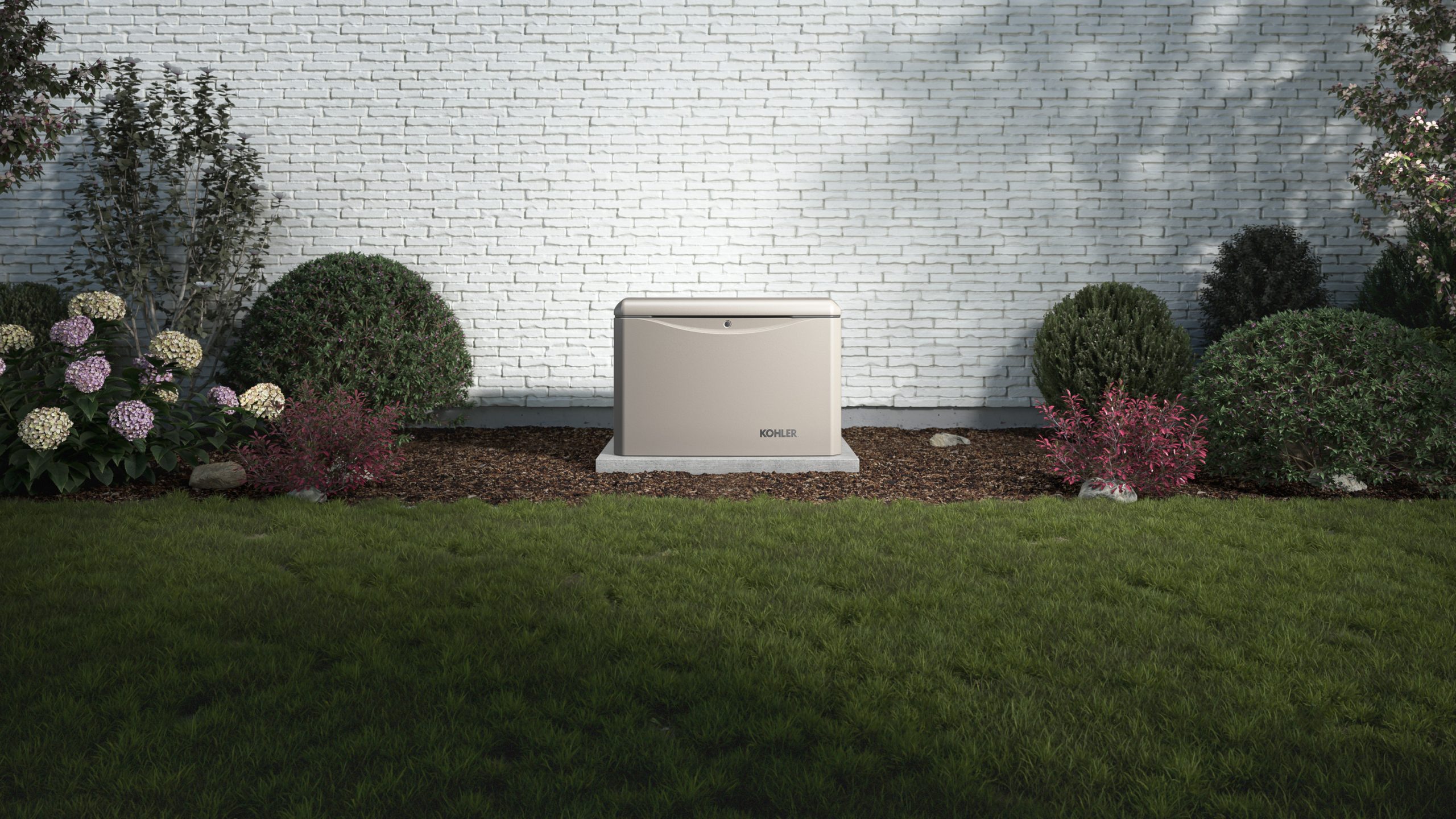
Generator type also narrows the size range you will consider. Portable generators can power a few essential appliances during an outage but require manual setup and refueling. Most homeowners looking for reliable backup power choose an automatic standby generator, which restores power within seconds and can power selected circuits or the entire home. Air-cooled standby generators commonly range from 10 kW to 26 kW, with larger liquid-cooled models available for homes with higher electrical demands.
Running Watts vs. Starting Watts
Every appliance has two wattage numbers, and both matter for generator sizing.
- Running wattage is the steady power an appliance uses while it operates.
- Starting watts, also called surge watts, is the brief spike of power a motor needs to start up. Items with motors, like a sump pump, refrigerator, or air conditioner, can pull two to three times their running wattage for a second or two at startup.
Typical Appliance Wattage
The table below shows approximate power consumption for common household appliances. Actual figures vary by model, so check the nameplate on your own equipment.
| Appliance | Running Watts | Starting Watts |
| Refrigerator or freezer | 600 to 800 | 1,200 to 2,000 |
| Sump pump (1/3 HP) | 800 | 1,300 to 2,100 |
| Well pump (1 HP) | 2,000 | 4,000 |
| Window air conditioner (10,000 BTU) | 1,200 | 1,800 |
| Central AC unit (3 ton) | 3,500 to 5,000 | 5,000+ |
| Furnace fan | 600 to 800 | 1,200 |
| Electric water heater | 4,000 to 4,500 | 4,500 |
| Electric stove (per element or oven) | 2,000 to 5,000 | 2,000 to 5,000 |
| Lights (whole home) | 200 to 600 | 200 to 600 |
| Home medical equipment | 50 to 1,500 | Varies |
How to Calculate the Right Generator Size
You can estimate your power needs in four steps.
- List the appliances you want to power. Decide what has to stay on during an outage. For many homes that means the refrigerator, sump pump, furnace fan, some lights, internet equipment, and any medical equipment.
- Add up the running watts. Total the running wattage of everything on your list. This is your baseline load.
- Add the largest starting surge. Find the appliance with the highest starting watts, usually the air conditioner or well pump, and add that surge figure to your running total.
- Add a safety margin. A small buffer helps prevent the generator from operating at full capacity. However, the most accurate way to size a standby generator is through a professional load assessment that evaluates your home’s actual electrical demand.
For example, a refrigerator (800), sump pump (800), furnace fan (700), and lights and electronics (1,000) make a running load near 3,300 watts. Add a sump pump surge of about 1,300 watts plus a 20 percent margin, and a 7,500-watt generator covers that list. If you want to add central air conditioning, the number climbs toward a larger standby unit. Keep in mind this is only a simplified example. Actual generator sizing should consider your home’s electrical panel, HVAC equipment, fuel source, and future power needs.
Generator Types and How Size Fits In
The right generator size also depends on the type of generator you choose.

Whole-House vs. Selected-Circuit Coverage
You do not always need to power every circuit. There are two common approaches.
- Whole-house generator: Powers most or all of your home’s essential systems. Depending on your electrical load, often 22 kW or more, plus an automatic transfer switch tied to the electrical panel.
- Selected-circuit coverage: Powers only the priority circuits you choose, such as the furnace, refrigerator, sump pump, and a few outlets. A smaller generator and a load-managing transfer switch can keep a larger home comfortable without paying for full capacity.
Smart load management systems help prioritize essential appliances while temporarily delaying less critical loads during periods of high demand. This technology often allows homeowners to choose a smaller generator without sacrificing comfort or reliability.
Fuel Types and How They Affect Sizing

Fuel choice influences run time, cost, and which generator sizes are practical. Gasoline powers most portable units and is easy to find, though it stores poorly and needs frequent refueling. Propane works for both portable and standby units, burns clean, and stores well in a tank for years. Natural gas connects to a home gas line for nonstop run time with no refueling, which makes it a common standby choice, while diesel brings strong fuel efficiency to large standby and industrial units.
For a standby generator, natural gas and propane are the popular options because they supply continuous power without anyone hauling fuel during a storm. Your home’s available fuel source is another important consideration when selecting the right generator size and model. Fuel consumption rises with load, so a right-sized generator also helps control costs.
The Role of the Transfer Switch
A transfer switch connects a generator to your home’s electrical panel safely. It keeps generator power and utility power separate, preventing dangerous backfeed onto the grid.
- A manual transfer switch requires you to start the generator and flip the switch by hand. It pairs with portable generators.
- An automatic transfer switch senses the outage, starts a standby generator, and moves the load over on its own, usually within seconds.
Sizing the transfer switch to match the generator and the panel is part of a proper installation, which is why this work belongs with a professional.
Safety Comes First
A generator must be operated safely. Portable units produce carbon monoxide and should never run indoors, in a garage, or near open windows. A standby generator installed by professionals is placed and vented to code. Correct wiring also protects your electrical panel and utility crews working on downed lines during severe weather. Most standby generators perform automatic weekly self-tests to help ensure they’re ready when a power outage occurs.
When to Call a Professional

Online calculators give a rough estimate, but a professional load assessment also considers future additions such as a pool, electric vehicle charger, workshop, or home addition so your generator continues to meet your future needs for years to come.. A licensed installer reviews your appliances, electrical panel, and local code requirements, then recommends a generator size and transfer switch that fits. This matters most for standby and whole-house systems, where the unit ties directly into the home’s wiring and fuel supply.
Get the Right Generator Size with Anderson Power Services
Choosing the right generator comes down to your appliances, your fuel options, and how much of the home you want to keep running. Once you know your wattage requirements, the right unit and transfer switch follow.
That is where local know-how makes the difference. Anderson Power Services is a veteran-founded, authorized Generac and Kohler dealer covering Georgia, South Carolina, South Alabama, and Florida. The team sells and installs home, commercial, and industrial generators, along with automatic transfer switches, propane tanks, and portable generators, and it services Generac, Kohler, and other generator brands.
Our team begins every project with a free on-site consultation to evaluate your home’s electrical needs and recommend the right generator for your lifestyle and budget. From professional installation to ongoing maintenance and repairs, we’re here to help keep your home powered when it matters most. Contact Anderson Power Services today to schedule your free consultation.
Get a Consultation
Virtual or in-person, we will help you determine the best backup power solutions for your needs.