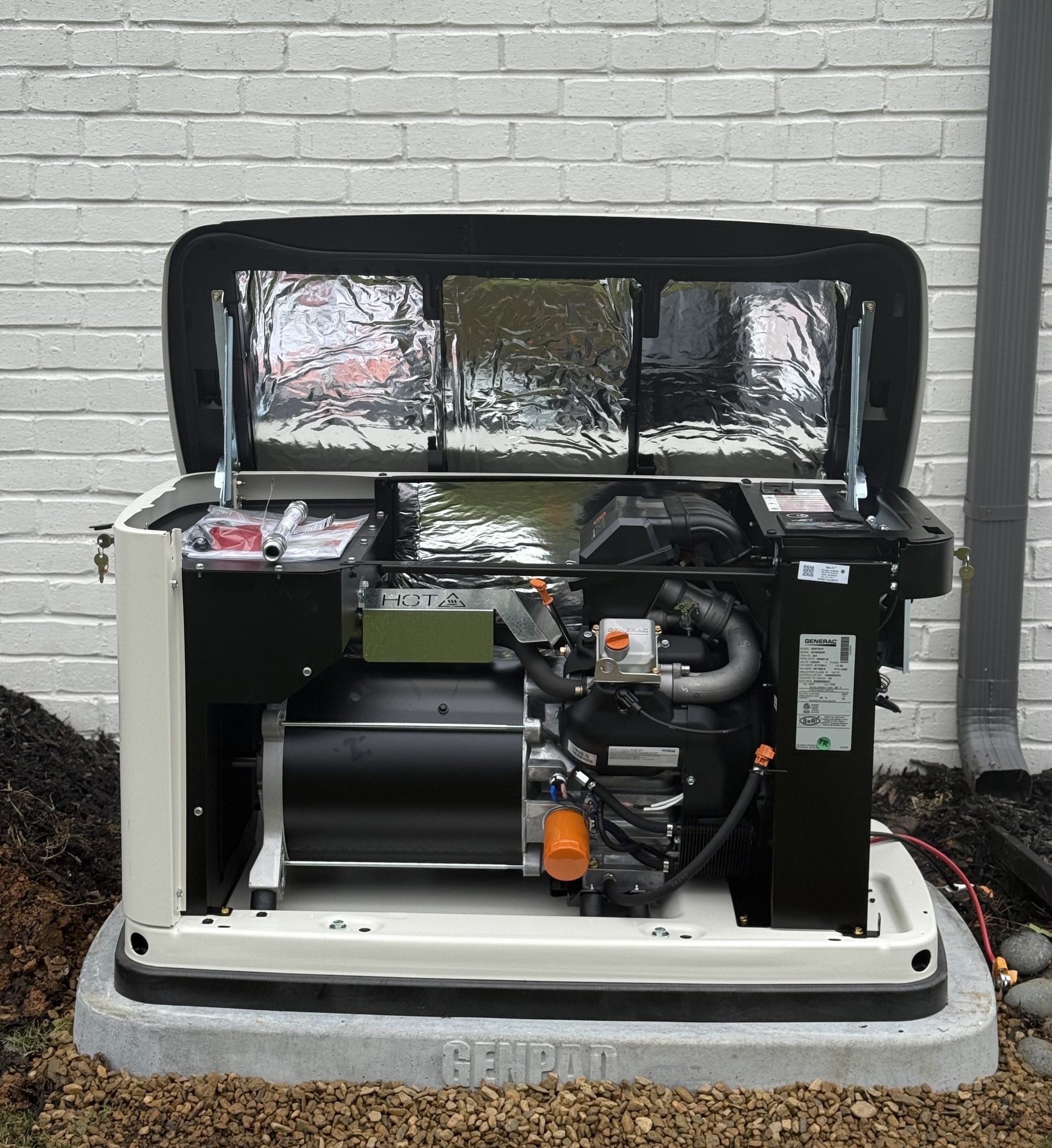

Short Answer: A generator produces electricity by putting motion to work. An engine spins the alternator, and that motion becomes usable electrical power for your home, business, or equipment.
The same basic principle applies to a portable generator, a standby generator, and a larger generator used for commercial or industrial applications. The difference is in the generator’s size, fuel source, output, connection method, and level of automation.
For homeowners, the biggest question is usually what happens when utility power fails. A standby generator can detect an outage, start automatically, and deliver backup power through an automatic transfer switch. That allows selected circuits or the entire home’s electrical system to continue running while the grid is down.
Parts That Make a Generator Work
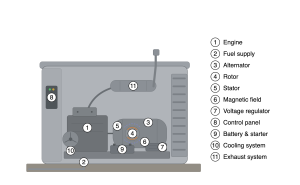
Every generator has a group of systems that work together to convert engine motion into usable electricity.
| Generator part | What it does |
| Engine | Uses fuel to create the motion that drives the generator |
| Fuel supply | Delivers natural gas, liquid propane, gasoline, or diesel to the engine |
| Alternator | Changes mechanical energy into electrical energy |
| Rotor | Rotates inside the alternator and produces the moving magnetic field |
| Stator | Holds stationary wire coils where electrical current is produced |
| Magnetic field | Allows electromagnetic induction to take place |
| Voltage regulator | Helps maintain stable output voltage |
| Control panel | Displays generator status, controls, warnings, and operating information |
| Battery and starter | Starts the engine in many standby generator systems |
| Cooling system | Manages engine temperature while the generator runs |
| Exhaust system | Carries engine exhaust away from the generator |
| Automatic transfer switch | Connects a standby generator to the electrical system and switches the load from utility power to generator power during an outage |
The engine supplies motion. The alternator turns that motion into electrical output. The other systems help the generator start, operate safely, and supply steady power.
The Science Behind Generator Power
An electric generator works through a process called electromagnetic induction. It happens when movement changes the relationship between wire coils and a magnetic field.
Inside the alternator, a rotor spins near the stator’s wire coils. The changing magnetic field causes electrons in the wire to move, creating electrical current. That current becomes the electrical energy used by lights, appliances, heating and cooling systems, security equipment, medical devices, and other connected loads.
Most home backup generators use an internal combustion engine to create the motion needed for this process. The engine runs on a fuel source, turns the alternator, and sends electrical output to the equipment connected to the generator.
The process follows a straightforward order:
- The fuel supply delivers fuel to the engine.
- The engine produces mechanical energy.
- The engine turns the alternator.
- The alternator produces electrical current.
- A voltage regulator manages output voltage.
- The control panel monitors generator operation and electrical load.
- The generator sends electrical power to connected circuits.
How a Generator Produces Electricity
A traditional generator follows the same basic process regardless of its size. A portable unit, home generator, and industrial generator may have different power output levels, but each depends on mechanical energy, a magnetic field, and an alternator.
The Engine Starts the Process
Most generators use an internal combustion engine. Fuel reaches the engine through a fuel tank, propane tank, or natural gas line.
Home backup generators commonly run on natural gas or liquid propane. Portable generator models often use gasoline, while diesel engines are common in larger commercial and industrial applications.
Inside the engine, fuel mixes with air and ignites in the combustion chamber. The resulting pressure moves engine components and turns the crankshaft.
The Alternator Turns Motion Into Electrical Output
The crankshaft connects to the alternator through a shaft. When the engine runs, it spins the rotor inside the alternator.The rotor contains magnets or electromagnets. As the rotor spins, its magnetic field moves past the stator’s stationary wire coils, causing electrons in the coils to flow. That flow creates electrical current.
AC and DC Power
Most residential and commercial generators produce alternating current, also called AC power. AC electrical power is used by standard wall outlets, household appliances, electrical panels, and most equipment in a home.
Some generator components use direct current, also called DC power. The generator battery, for example, uses DC power. An inverter generator may also convert electrical output before supplying power to connected devices.
The Voltage Regulator Keeps Power Steady
Engine speed affects electrical output. If the engine runs too fast or too slow, the generator can produce unstable voltage or frequency.
The voltage regulator helps keep output voltage within the operating range needed by connected equipment. This helps protect appliances, electronics, motors, and other electrical loads.
The control panel tracks the generator’s operating condition. Depending on the model, it may show operating hours, maintenance reminders, battery status, warning lights, power output, or fault codes.
Electricity Reaches Your Home or Equipment
Once the generator produces and regulates electrical current, the electricity moves to the connected electrical load.
With a portable generator, electrical power usually travels to outlets on the generator’s own control panel. Heavy-duty extension cords can also supply power to individual appliances, lights, tools, or other equipment.
With a standby generator, the electrical output travels through a transfer switch before reaching the home’s electrical system. The transfer switch separates the home from utility power before generator power takes over.
What Happens During a Power Outage?

A standby generator is a permanently installed system that waits for a power outage. It connects to the home’s electrical panel, fuel supply, and automatic transfer switch. Commercial and industrial standby systems follow the same detect-start-transfer sequence, scaled up to larger loads and paired with a transfer switch sized for the facility.
When utility power fails, the transfer switch begins the backup process.
The System Detects the Outage
The automatic transfer switch monitors the electricity coming from the utility grid. When voltage drops or utility power stops, the switch recognizes the interruption. It then sends a signal to the standby generator to start.
The Generator Starts and Stabilizes
The generator’s battery and starter activate the engine. The engine begins turning the alternator, which produces electrical energy.
Before the generator carries the home’s electrical load, it needs to reach the correct engine speed and stable output voltage. This gives the system time to produce usable power before the transfer switch changes the home’s power source.
The Transfer Switch Moves the Load
After the generator reaches stable operating conditions, the automatic transfer switch disconnects the home from the utility line. It then connects generator power to the home’s electrical system.
This process prevents backfeeding. Backfeeding occurs when generator electricity travels out through utility lines. That can create hazards for utility workers and damage electrical equipment when utility power returns.
A correctly installed transfer switch keeps utility power and generator power separated.
Backup Power Reaches Connected Circuits
Once the transfer switch changes the power source, the generator supplies backup power to the circuits included in the system design.
Depending on generator size, electrical load, and load-management settings, the generator may power:
- Refrigerators and freezers
- Lighting circuits
- Internet and communication equipment
- Security systems
- Sump pumps
- Well pumps
- Heating and cooling equipment
- Medical devices
- Kitchen appliances
- Garage door openers
A generator should be sized around the equipment you want to run, including the added startup demand of motors in equipment such as air conditioners, refrigerators, pumps, and HVAC systems.
Utility Power Comes Back
The transfer switch continues monitoring the grid while the generator runs. When utility power returns and remains stable, the switch moves the home back to utility power.
The generator runs for a short cooldown period, shuts down, and returns to standby mode. It remains ready for the next outage.
Portable vs. Standby Generators
Portable and standby models both create electrical power through engine motion and electromagnetic induction. The homeowner experience is very different.

A portable generator can be useful for temporary power needs. It requires hands-on setup during every outage, including placing it outside, starting the engine, connecting loads, and monitoring its fuel tank.
A standby generator supports a more automatic backup power plan. It can start and transfer power even when nobody is home, provided the system has fuel and has been maintained.

Keep Your Power On With Anderson Power Services
A generator works by using engine motion to create electrical energy. During an outage, a standby generator and automatic transfer switch can restore backup power to the circuits and systems selected for your home.
Anderson Power Services provides generator sales, installation, maintenance, and repair for residential, commercial, and industrial customers across the Southeast. As an authorized Generac dealer, Anderson Power Services offers home generators, commercial generators, industrial generator solutions, portable generators, automatic transfer switches, and residential and commercial propane tanks.
The team can evaluate your electrical load, available fuel supply, property layout, and backup power needs during a free on-site or virtual consultation. Anderson Power Services also provides Peace of Mind Service Plans with scheduled maintenance and 24/7/365 remote monitoring options to help keep your generator ready for the next power outage.
Get a Consultation
Virtual or in-person, we will help you determine the best backup power solutions for your needs.