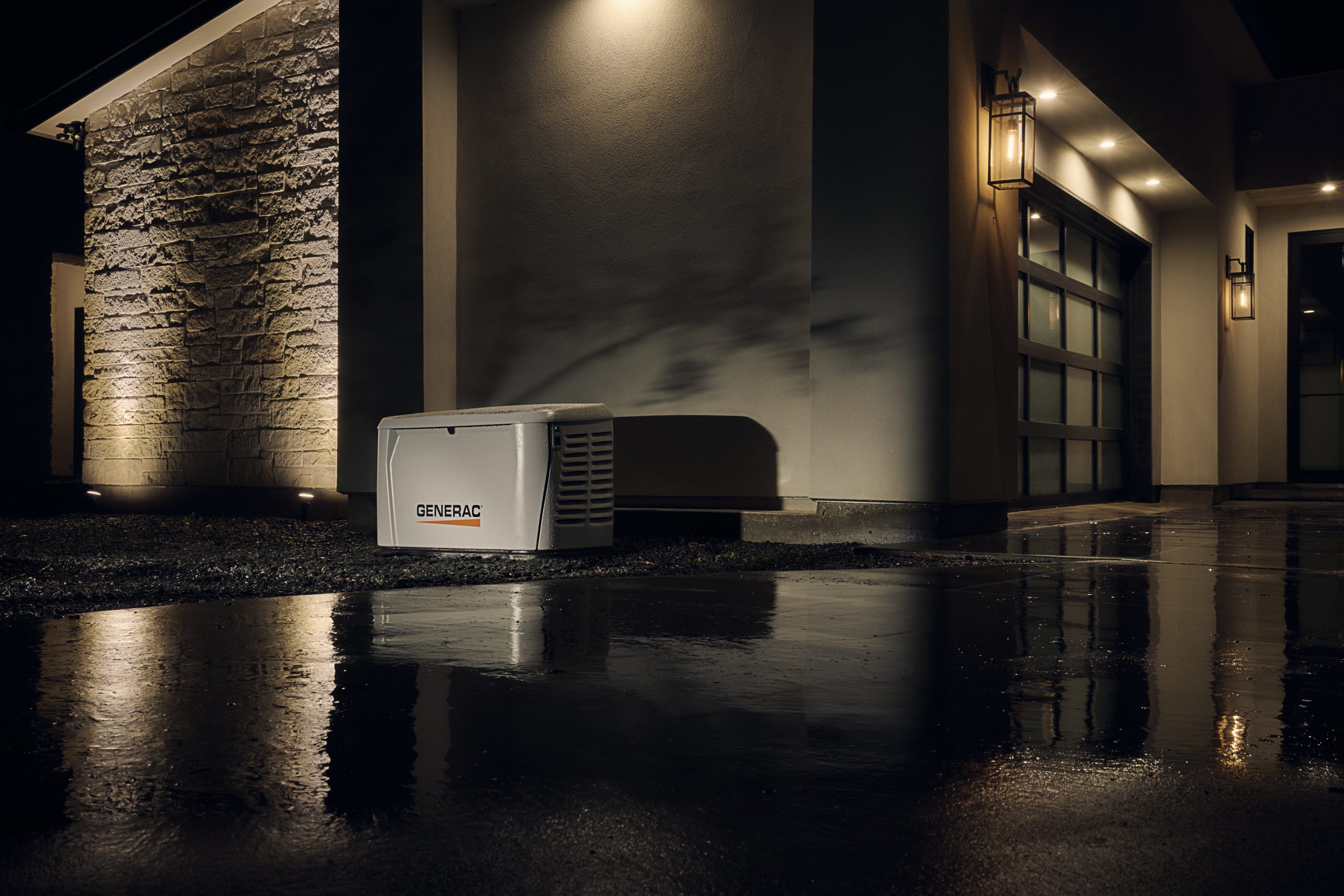

At a Glance: A home standby generator is not silent, but it is far quieter than most people expect. A typical air-cooled unit runs in the mid-60s on the decibel scale when measured from about 23 feet away, roughly the level of a normal conversation or a central air conditioner. You can stand near one and talk without raising your voice. Where it sits on your property, how it is enclosed, and how well it is maintained all shape how much you and your neighbors actually notice it.
Noise is one of the first questions homeowners ask before adding backup power, and it is a fair one. Nobody wants a machine that drowns out the backyard every time the lights flicker. The reassuring part is that modern residential units are built to run at a steady, moderate hum, and smart placement handles most of the rest.
Are Standby Generators Loud?
By the numbers, a standby generator sits in comfortable company. A normal conversation runs about 60 to 70 decibels, and most air-cooled home standby units land in that same range at a normal listening distance. The published decibel ratings for a generator are usually measured at about 23 feet with the unit under normal load, and many Generac units read in the mid-60s there, dropping into the high 50s during their low-speed self-test.
For comparison, a running dishwasher or a central air conditioner produces a similar sound level. A standby generator is not a silent generator, and no honest company will promise one, but it is a long way from a loud generator roaring in the yard. The noise is also a constant hum rather than the surging, uneven sound of an open-frame portable, which many people find easier to tune out.
Making Sense of the Decibel Scale

Decibels do not add up the way regular numbers do. The decibel scale is logarithmic, so a sound that is 10 decibels louder is about ten times more intense, and to your ears it sounds roughly twice as loud. That tenfold increase in sound intensity is why a few points on a spec sheet matter more than they look. A unit rated at 75 decibels is not slightly louder than one at 65, it is dramatically louder.
It also puts generator noise in perspective. Hazardous noise, the kind that threatens hearing over long exposure, starts around 85 decibels. A home standby running in the mid-60s sits well below that line. The goal with a residential unit is not hearing safety, it is comfort and good relations with the people next door.
What Makes a Generator Louder or Quieter?
Several things decide where a given unit falls on the sound level chart. Knowing them helps you set expectations before anything is installed.
Does engine size and load change the noise?
Yes, to a point. A larger generator with a bigger engine generally produces more noise output than a small one, and a unit working hard under heavy load runs louder than the same unit idling along. Fuel type plays a smaller role than most people think for home units, since gas generators running on natural gas or propane are the standard for standby power. For portable power, an inverter generator is the quiet champion, because it throttles its engine down to match the load instead of running flat out.
How much does distance help?
Distance is the simplest lever you have. Sound intensity falls off quickly as you move away from the source, such as a generator that reads in the mid-60s up close is noticeably softer by the time it reaches a bedroom window or the property line. This is why placement does more for everyday quiet than almost anything else.
What about enclosures and mounts?
Build quality matters. Residential standby units ship inside a sound-attenuating enclosure lined with foam that dampens engine noise, and anti-vibration mounts keep the running engine from buzzing through its mounting pad and the ground. Add-on acoustic barriers or landscaping can trim a few more decibels for homes in a tight residential area. These features are why a well-built unit in a solid generator housing stays at quiet operation levels that a bare open-frame machine never reaches.
Where should a standby generator go?

Placement is where noise, safety, and code all meet, and it is the part of the job best left to a professional. There is no single maximum distance for installing a standby generator from the home. Instead, the right spot follows the manufacturer’s instructions, local building and fire codes, and your permit requirements, which vary by city and county across the Southeast.
How far does it need to be from windows and from my neighbor?
A standby unit needs clearance from doors, windows, and vents so exhaust never drifts back inside, along with room for airflow and service access. Beyond the code minimums, thoughtful placement looks at the neighbor’s side of the fence too. Positioning the unit away from bedrooms and shared property lines keeps noise pollution to a minimum and heads off friction with the people next door. Many areas also have noise ordinances with decibel limits at the property line, which a local installer will already know.
A professional weighs all of this, pulls the permit, and sets the unit where it runs cleanly and quietly. Getting the right location also ties into how the automatic transfer switch and fuel line connect, and it helps to know whether your installation needs a permit before work begins.
How portable generators compare
Portable units tell a different noise story. Many open-frame models run louder than a standby unit and change pitch as the load shifts, which can be more noticeable even at a similar decibel rating. An inverter generator is the quieter option in this category. Whichever type you use, a portable must run outside only, at least 20 feet from the house with the exhaust pointed away from windows, doors, and vents, because its exhaust carries deadly carbon monoxide.
A permanently installed standby generator sidesteps that routine. It sits in one fixed, code-approved spot outside, runs inside its sound-attenuating enclosure, and starts on its own when the power goes out, with no cords to drag and no engine to wrestle during a storm.
Keeping it quiet over time
A generator that was quiet on day one can grow noisy if it is neglected. Loose parts, a worn anti-vibration mount, or a failing component will add rattles and excessive noise long before they cause a breakdown. Regular maintenance catches those early and keeps the unit at its designed sound level.
A generator maintenance plan puts a technician on a schedule to tighten, inspect, and service the unit, and remote monitoring flags trouble between visits. Knowing what a maintenance visit covers makes it easier to see why a serviced unit stays quieter and lasts longer than one left on its own.
Planning a Quiet Install with Anderson Power Services

The quietest generator is the one placed and maintained correctly, and that is where a local expert earns their keep. Anderson Power Services is an authorized Generac dealer serving homeowners across Georgia, South Carolina, South Alabama, and Florida, with local offices in Atlanta, Brunswick, Cleveland, Dalton, Delray Beach, Dothan, Greenville, Macon, Miami, Panama City, and Valdosta. Factory-trained technicians know Southeast permitting and code, and they place each unit for safe, quiet, reliable operation. The team holds a 4.9-star Google rating across more than 1,000 reviews and is available 24/7.
Every installation starts with a free on-site or virtual consultation, followed by delivery and installation, then ongoing care through a Peace of Mind Service Plan with 24/7/365 remote monitoring and the Generac MobileLink app. Financing is available through Synchrony. To find the right Generac home standby generator and the quietest spot for it on your property, schedule your free consultation or call 706-348-1501, and reach the local office for your area for help close to home.
Get a Consultation
Virtual or in-person, we will help you determine the best backup power solutions for your needs.