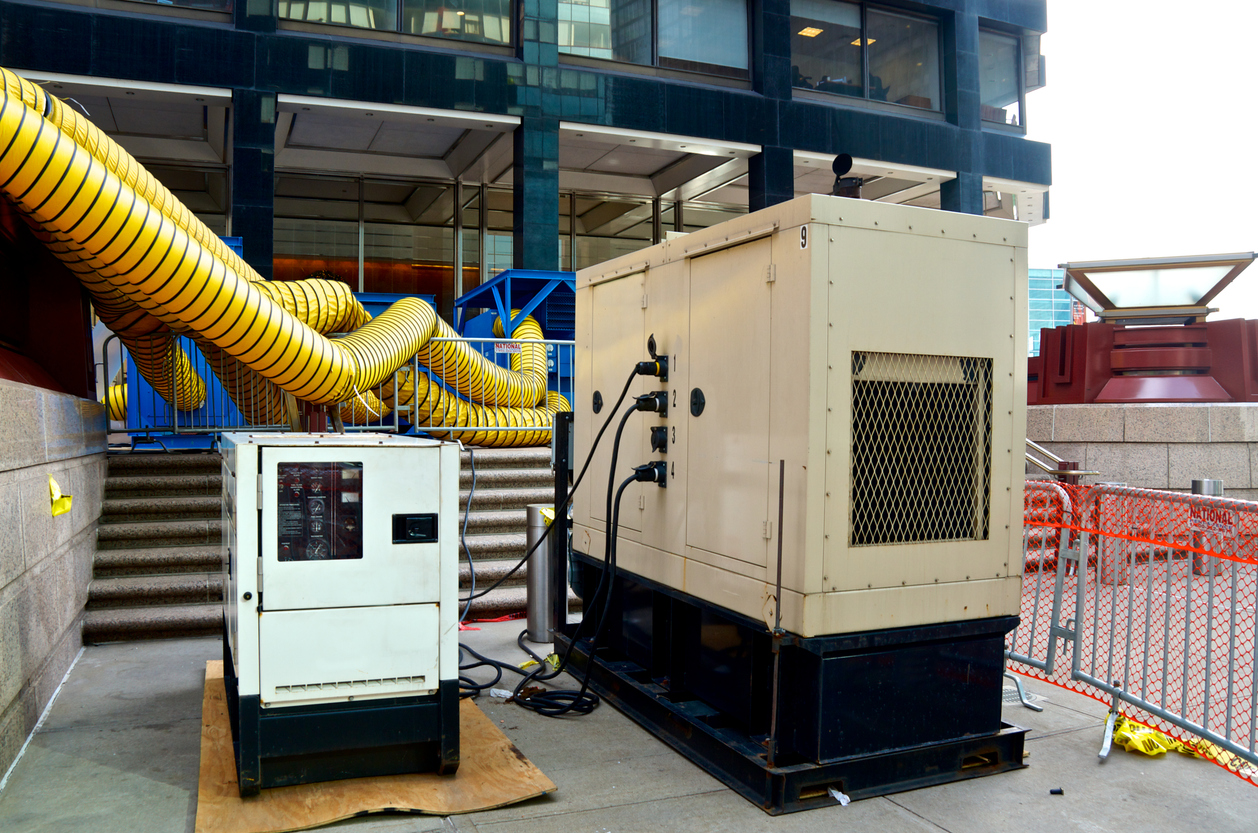

The Short Answer: A generator load bank test applies a controlled artificial electrical load to a generator, allowing a technician to check performance without relying on the building’s normal equipment or waiting for a power outage. It is most useful for commercial, industrial, and other high-demand backup generator systems, especially after installation, major repairs, electrical-load changes, or long periods of light operation. A small home standby generator usually follows a different maintenance plan and may not need the same testing approach.
A generator can start during a routine exercise and still struggle when it has to carry real electrical demand. Load bank testing gives facility owners a controlled way to check voltage stability, frequency, cooling, fuel delivery, and generator capacity before an outage puts the system under pressure.
For a commercial or industrial property, the question is rarely just whether the generator starts, but instead, whether it can carry the equipment that matters when utility power fails.
What a Generator Load Bank Does

A generator load bank creates a planned artificial load for the generator to carry. It draws electrical energy from the generator without relying on the building’s normal equipment, so technicians can test output without disrupting operations.
The load can be increased in stages, measured, and removed at the end of the test. This creates repeatable load conditions and gives technicians a way to compare current results with previous maintenance records.
A generator load bank can help evaluate:
- Generator power output
- Voltage and frequency stability
- Engine response under load
- Cooling-system performance
- Fuel-supply performance
- Exhaust-system condition
- Control-panel alarms
- Automatic transfer switch communication
- Generator capacity at a planned electrical demand
Resistive vs. Reactive Load Bank
A resistive load bank runs current through resistive elements that convert electrical energy to heat and blow it off with fans. It loads the generator at a power factor of 1.0, working the engine, cooling system, fuel system, and exhaust all at once, which makes it the common choice for most commercial standby testing.
A reactive load bank adds an inductive element to mimic the motors in a real facility, which draw power at a lagging power factor closer to 0.8. Where a resistive test goes easy on the alternator, a reactive test puts the alternator and voltage regulator under strain, which is where power factor problems show up. Sites with heavy motor loads benefit from it, and many commercial tests combine both for the closest match to real demand.
When Load Bank Testing Is Needed

Load bank testing is not a one-size-fits-all maintenance task. A small home generator, a portable generator, and a large industrial generator serve different purposes and operate under different conditions.
Load banking makes the most sense when the generator supports a facility where downtime could interrupt safety systems, operations, inventory protection, communications, or critical equipment. That need usually shows up at a handful of specific moments, from a new install to a change in the building’s electrical demand. Here is when a load bank test earns its place on the schedule.
After Installation and Commissioning
A new generator should be tested before it becomes the building’s primary backup power source.
The installation may look complete, but the generator, fuel supply, electrical connections, controls, and automatic transfer switch still need to work together under actual demand.
A commissioning load test can reveal issues that may not appear when the generator runs with little or no electrical load, including:
- Voltage instability
- Fuel restrictions
- Cooling problems
- Control issues
- Electrical connection errors
- Transfer switch communication problems
The initial test also creates a performance baseline. Future test results can be compared against that record to spot changes in generator performance.
After Major Repairs
A generator may need a load test after repairs to the engine, alternator, voltage regulator, fuel system, exhaust system, or transfer switch.
For example, a diesel generator may start and idle normally after fuel-system repair. That does not prove the repaired system can deliver enough fuel when the generator is operating at a higher load.
A controlled load test allows a technician to verify the repair while the generator is operating under the conditions that matter most.
After Electrical Demand Changes
Building electrical demand often changes over time. A property may add HVAC equipment, refrigeration units, server racks, production equipment, pumps, electric vehicle chargers, or large motors.
Those changes can affect the load the backup generator must carry during an outage. A generator that was properly sized for the building several years ago may have less available capacity after new equipment is added.
Load bank testing can help establish whether the generator still performs at the levels expected for the facility’s current electrical demand.
When a Diesel Generator Runs Lightly
Diesel generators that spend long periods operating at low load may experience wet stacking. This happens when the engine does not reach a temperature that supports complete combustion.
Unburned fuel and carbon can collect in the exhaust system, contributing to black smoke, oily residue, reduced performance, and added maintenance needs.
Running a diesel generator below 30 percent of rated capacity can keep the engine from reaching the temperature and pressure needed to burn off carbon deposits. A planned load bank test increases electrical demand, raises operating temperature, and helps technicians evaluate the generator under more realistic conditions.
When Backup Power Supports Critical Operations
Some facilities cannot afford to learn about a generator problem during a power outage.
A generator load bank test may be appropriate for:
- Data centers
- Healthcare facilities
- Assisted-living communities
- Manufacturing sites
- Cold-storage operations
- Water and wastewater facilities
- Telecom sites
- Public-safety buildings
- Multi-tenant commercial properties
- Facilities with an uninterruptible power supply
The generator may only support selected emergency circuits, but those circuits may be central to keeping the facility safe and operating.
What a Load Bank Test Can Reveal

Load bank testing provides a picture of generator performance under controlled demand. A routine no-load exercise can confirm that the engine starts. A load test checks how the system responds after demand is applied.
Output Quality Under Demand
The generator must maintain stable voltage and frequency as load rises. If electrical output changes too much, connected equipment may not operate as expected.
This matters for sensitive electronics, lighting, pumps, HVAC equipment, building controls, communications systems, and other equipment that depends on steady electrical power.
Fuel and Cooling-System Performance
A generator uses more fuel and produces more heat as electrical demand rises. A weak fuel pump, restricted fuel line, cooling-system issue, or exhaust problem may not appear during a short exercise cycle.
Load bank testing allows the technician to watch temperatures, pressures, fuel delivery, exhaust condition, and alarms while the system works harder.
Transfer Switch Performance
The transfer switch controls the change between utility power and generator power. A full backup power system depends on the generator and transfer switch working together correctly.
During a planned test, technicians can verify that the transfer equipment responds as intended and that the generator is ready to carry the load assigned to it.
Available Generator Capacity
A generator may perform well at 25 percent or 50 percent of its nameplate kW rating but show problems at a higher demand level.
Testing does not always need to use full load. The appropriate test target depends on the generator’s application, manufacturer guidance, facility requirements, and applicable industry standards.
Load Bank Testing and Other Generator Checks
A load bank test is one part of preventative maintenance. It does not replace routine inspections, fluid service, battery testing, fuel-system checks, or transfer switch maintenance.
| Maintenance activity | What it checks |
| Routine exercise | Basic startup and generator operation |
| Battery test | Starting capacity and battery condition |
| Fuel-system inspection | Fuel supply, leaks, filters, and delivery |
| Transfer switch inspection | Safe movement between utility and generator power |
| Building-load test | Operation with the facility’s actual connected equipment |
| Load bank test | Generator performance at a controlled artificial load |
A well-planned maintenance program combines these tasks based on the generator’s role. Anderson Power Services offers generator maintenance and repair for residential, commercial, and industrial systems, including service plans tailored to generator size, usage, and manufacturer guidance.
Testing Schedules Depend on the System
There is no single load-bank testing schedule for every generator.
For systems covered by NFPA 110, monthly exercise and supplemental load testing may apply depending on the system type, fuel, and load achieved during routine operation. Diesel emergency power supply systems may need additional testing when monthly exercise does not reach the required load or exhaust temperature. NFPA 110 maintenance and testing guidance outlines these common requirements.
For other systems, scheduling may be driven by:
- Manufacturer recommendations
- Generator age and service history
- Diesel engine loading history
- Insurance requirements
- Facility maintenance policies
- Local requirements
- Recent repairs
- Changes in building electrical demand
A maintenance provider can review the generator set, maintenance history, electrical load, and system purpose to recommend a testing plan that fits the site.
Prepare for a Productive Load Test
A little preparation helps the test produce useful results.
Before scheduling, gather:
- Generator model and nameplate kW rating
- Fuel type and fuel-supply details
- Recent maintenance records
- Previous load-test reports
- Generator alarm history
- Details about recent repairs
- Transfer switch information
- Changes to building equipment or electrical demand
- Site access and safety requirements
For a facility with critical operations, plan the test at a time when the maintenance team can communicate with building staff, monitor the generator, and respond if the test identifies a problem.
Load Bank Testing With Anderson Power Services
A load bank test helps facility owners understand how a generator performs under planned electrical demand. It can reveal issues with fuel delivery, cooling, electrical output, controls, transfer equipment, and generator capacity before a real outage puts the system to work.
Anderson Power Services provides commercial generator maintenance and industrial generator maintenance and service for businesses across the Southeast. The team can review your generator’s maintenance history, operating conditions, electrical load, and testing needs.
As an authorized Generac dealer, Anderson Power Services sells and installs Generac home, commercial, and industrial generators, along with Generac automatic transfer switches, propane tanks, and portable generators. Schedule a consultation with Anderson Power Services to discuss load bank testing, preventative maintenance, generator repair, or a backup power system for your property.
Get a Consultation
Virtual or in-person, we will help you determine the best backup power solutions for your needs.