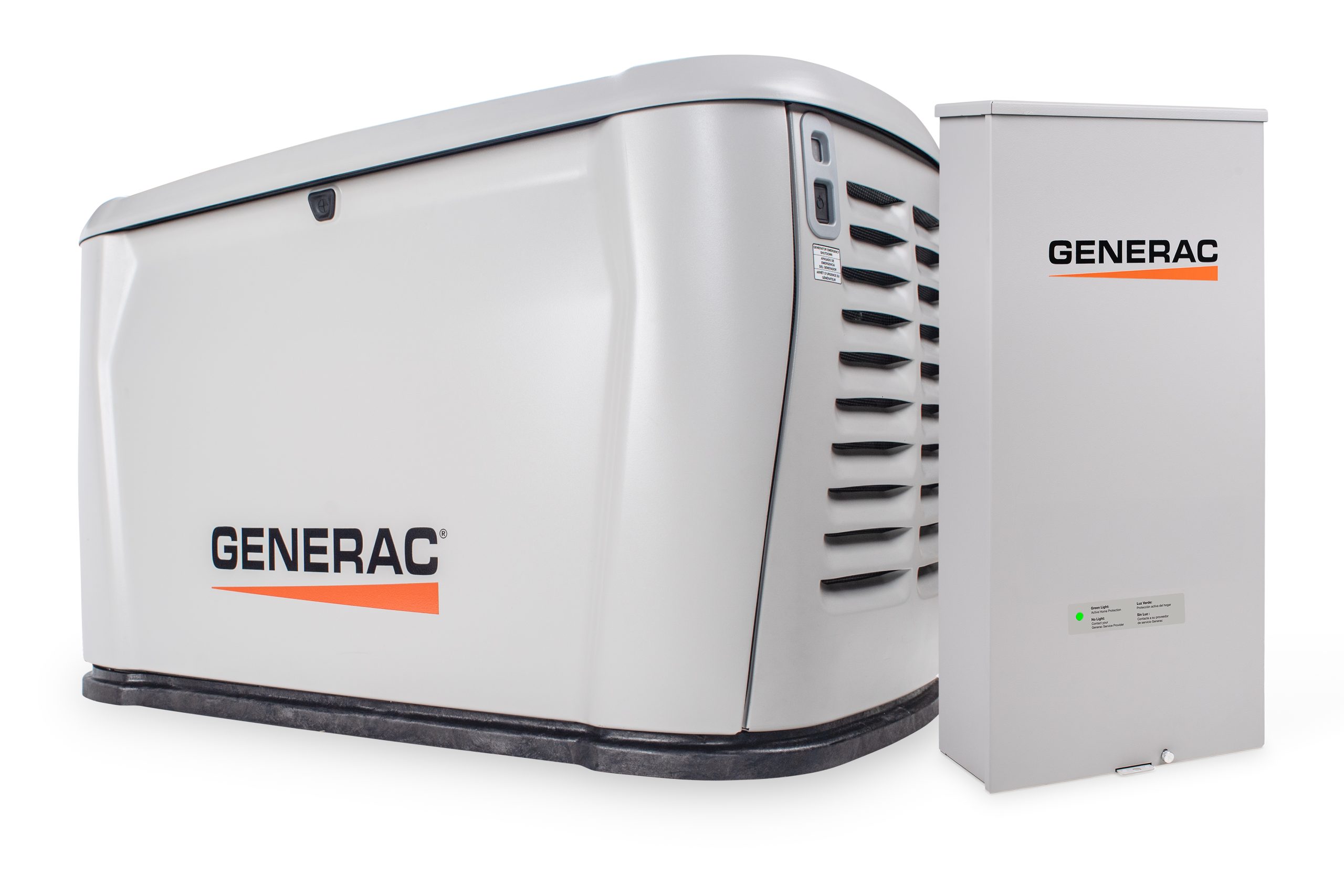

The Short Answer: By the time your home standby generator installation begins, the big decisions are already behind you. During your free on-site consultation, an Anderson Power sales rep sized the generator to your home’s electrical load, chose a safe location outside the house, and matched the unit with the right automatic transfer switch. Installation day is when our licensed, factory-trained crews put that plan into action: preparing the site, setting the generator, connecting the fuel source, wiring the transfer switch into your home’s electrical system, and testing everything under a simulated power outage. We complete the whole process, including permits and inspections.
Most homeowners come to us knowing they want reliable backup power and not much about what installing it involves. This guide walks through what is decided during your consultation, what happens on installation day for a home standby generator, and how the finished system responds the moment the power goes out.
Why Homeowners Install a Home Generator
- Backup power that holds: The refrigerator, the freezer, and the well pump keep running through a power failure instead of waiting on the utility.
- Heating and cooling: Losing the AC during a southern summer or the furnace during a cold snap turns a nuisance outage into a real problem.
- Sump pump protection: Storms that knock out grid power are the same storms pushing water toward your basement.
- Medical and work-from-home needs: Some households cannot treat electricity as optional.
- Peace of mind: With a home generator, your regular systems (lighting, appliances, security systems, etc.) stay operational, just as they should during a power outage.
- Add value to your home: Installing a standby generator may increase your home’s value, particularly in areas that experience frequent power outages.
Before Installation Day: Your Consultation Settles the Big Decisions
Every Anderson Power project starts with a free on-site consultation, and that visit is where the planning happens. By the time our crew arrives to install, you have already purchased your generator, and every decision below has been made with your sales rep. Here is what gets settled and why each one matters.
Sizing the Generator to Your Home
Sizing starts with what you want running during an outage: the refrigerator, the well pump, the water heater, the HVAC, or the whole house. Two things make this harder than adding up wattages. Motors draw a surge of extra wattage at startup, so a well pump or central air compressor needs headroom well above its running number. A whole-home unit doesn’t have to be enormous if it includes load management, which sheds lower-priority circuits when demand spikes. Your sales rep runs this calculation during the consultation, so whether your home calls for a 14,000-watt generator or a larger whole-home unit, the equipment you purchase matches your actual load, not a guess.
Choosing Where the Generator Goes
The most important factor in placement is safe operation. Generators produce carbon monoxide, so the unit belongs outside, in open air, at least five feet away from windows, doors, and vents, which also helps cut down on noise. Heat matters too, since an operating engine gets hot enough to be a fire risk near siding or brush. Your standby generator also needs a level base several inches above grade so it stays secure and out of standing water. During the consultation, your sales rep surveys the property, accounts for local setback rules and your gas line routing, and marks the placement, so these safety hazards are engineered out before installation day.
Matching the Automatic Transfer Switch
The transfer switch is what lets your home move safely between utility power and generator power. It keeps the two sources isolated, so your appliances keep running smoothly, and so generator power never backfeeds onto the utility line, which is illegal and endangers the utility workers repairing it during an outage.
A manual transfer switch requires someone at home to move the electrical load over by hand. An automatic transfer switch detects the power outage and shifts your home to generator power on its own, which is why it is the standard pairing for a home standby generator. Like the generator itself, it is selected and purchased before installation begins, matched to your generator and your electrical panel during the consultation.
What Happens on Installation Day
With the plan set, our crews handle the generator installation from start to finish. You do not need to hire anyone else or manage any part of the work. Here is how the day unfolds.

Step 1: Site Preparation and Placement
The crew prepares the location chosen at your consultation, sets a level pad, and places the unit. A home standby generator weighs several hundred pounds, so our team arrives with the equipment to position your backup generator safely and precisely.
Step 2: Fuel Connection
A natural gas generator draws directly from the home’s gas line, so there is no refueling at all. Propane models connect to a propane tank on the property. Either way, our technicians run and connect the fuel line as part of the installation.
Step 3: Wiring the Automatic Transfer Switch
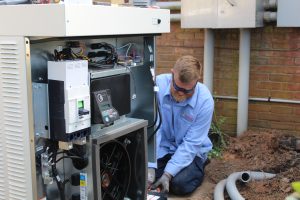
Our licensed electricians wire the automatic transfer switch between your meter and your main panel, then tie it into the generator’s control wiring so the two communicate. Because the transfer switch is doing the same job as your main disconnect, this connection is permitted and inspected like any other panel work. Anderson Power’s own crews complete every step of it: our professionals are steeped in mechanical and electrical engineering practices, so any unique wiring or modification your home’s electrical system needs is handled on the spot.
Step 4: Factory Authorized Start-Up and System Test
A generator that’s never run under load hasn’t proven anything. When we finish an installation, we simulate a utility failure, confirm the transfer happens, verify your essential appliances come back up, and walk you through how the system behaves. Running this test now means you find out today, on your schedule, instead of during the next power outage.
From then on, the system runs itself. When utility power drops, the automatic transfer switch signals the generator to start, disconnects the house from the utility line, and moves the load to generator power, typically within seconds. When grid power returns and holds steady, it switches back and shuts the generator down. There are no cords to run, no breakers to flip, and nobody needs to be home for any of it.
Permits, Inspections, and Why Professional Installation Matters
Any backup generator connection that touches your electrical panel is licensed work requiring a permit and an inspection, and requirements vary by county across Georgia, South Carolina, Alabama, and Florida. Anderson Power pulls the required permits, schedules the inspection, and performs the work with qualified electricians who know what your jurisdiction expects. Professional installation isn’t a formality here. It’s what keeps the work safe, code-compliant, and covered under your manufacturer’s warranty.
How a Standby Installation Differs from a Portable Generator Setup
A portable generator is the lower-cost entry point to backup power, and it works differently at every step. In the simplest setup, heavy-duty extension cords run from the portable generator to individual appliances: the refrigerator, a lamp, and the modem. Nothing hardwired, like the furnace or central air, is reachable with an extension cord, and someone has to be home to start the unit, connect it, and manage the load. Homes that want a portable generator to feed circuits in the main panel use equipment like a breaker interlock kit with an exterior inlet box or a manual transfer switch wired to a preselected group of circuits, and that panel-side equipment is licensed electrical work in its own right, installed and permitted before an outage ever hits.
A home standby generator installation replaces all of that with a permanent system: a dedicated fuel supply instead of refueling, an automatic transfer switch instead of cords and interlocks, and a whole-home connection completed, permitted, and tested by our crews. Anderson Power’s installation process covers home standby generators; if you’re weighing a portable against a standby, your consultation is the right place to talk through both.

One Rule for Every Setup: Never Connect a Generator to a Wall Outlet
When generator power enters your home’s electrical system without isolation from the grid, that electricity flows backward along the utility line to the pole transformer outside. Because the transformer normally steps voltage down for your house, running it in reverse steps that same power back up to thousands of volts, energizing lines that utility workers expect to be dead. People have died this way. This kind of generator connection also bypasses the circuit breaker protection inside your home, and when grid power returns, the resulting power surge can destroy the generator on the spot. Every legitimate connection method, from a transfer switch to an interlock, exists to prevent exactly this from happening.
Keep Your Power On with Anderson Power Services
A home generator installation comes down to a plan made at your consultation and a crew that executes all of it: placement, fuel, transfer switch wiring, permits, and a full system test before the next storm. When you schedule with Anderson Power, that is one team, start to finish.
Founded by veteran Kevin Anderson, Anderson Power Services has proudly provided reliable backup power solutions to homeowners and businesses across the Southeast. As an authorized Generac dealer, our team sells and installs Generac home, commercial, and industrial generators, along with Generac automatic transfer switches, propane tanks, and portable generators. Our factory-trained technicians service and maintain Generac, Kohler, Briggs & Stratton, and other leading brands, and we install EV charging stations as a ChargePoint authorized dealer.
Every project starts with a free on-site consultation, followed by professional installation, then ongoing maintenance and 24/7/365 remote monitoring through a Peace of Mind Service Plan. Financing is available through Synchrony. With a 4.9-star Google rating across more than 1,000 reviews, we help homeowners across the Southeast keep the power on. Call 770-758-0784 or schedule your free consultation today.
Get a Consultation
Virtual or in-person, we will help you determine the best backup power solutions for your needs.