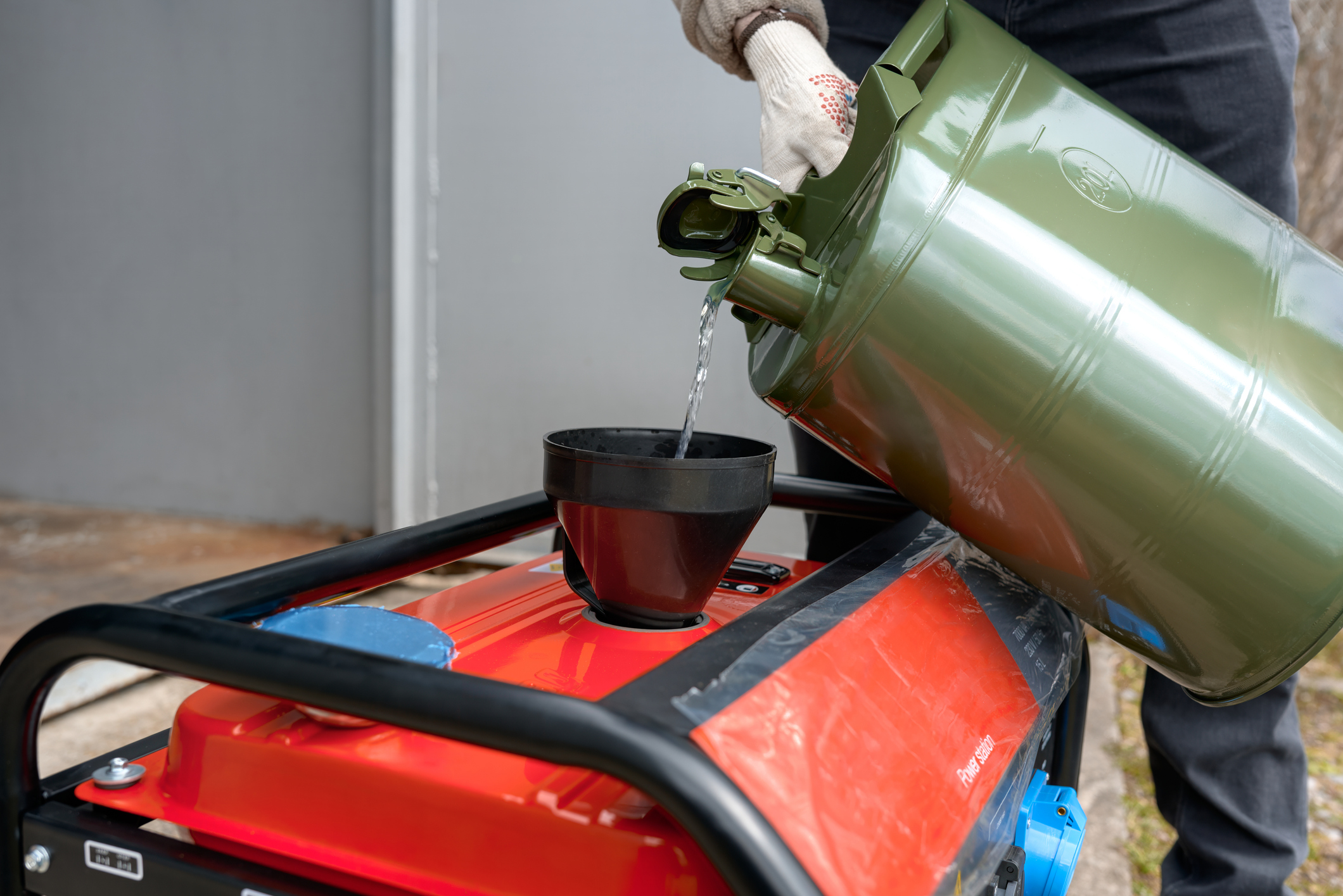

The Short Answer: For most homes, the choice is natural gas or propane, and it usually comes down to whether you have a gas line. Natural gas pipes in from the utility and never needs refilling. Propane stores indefinitely in a tank and works at addresses with no gas line. Diesel dominates industrial applications, and gasoline runs most portable generators, but neither is a practical whole-home answer.
Two identical-looking generators can perform completely differently, depending on the fuel they burn. Fuel type decides how long the unit runs, how often you have to refuel it, what it costs to keep ready, and how reliably it starts after sitting unused.
So before you compare kilowatts and brand names, it is worth understanding what each generator fuel type actually asks of you. Anderson Power Services helps homeowners answer which fuel source makes the most sense for their home, location, and backup power needs during the consultation.
Start With What You Can Actually Get
The best fuel is the one you can supply reliably at your address.
| Your Address | Best Fuel | Why |
| Gas Line at the Street | Natural Gas | Unlimited supply, no refueling, nothing to store. |
| No Gas Line | Propane | Stores indefinitely on site, no utility connection needed. |
| Large Industrial Load | Diesel | Most energy per gallon, built for sustained heavy load |
| Occasional short outages only | Gasoline | Cheapest to buy, but short shelf life and manual refueling |
The Four Fuels, Side by Side

The differences sort out along two lines: how you refuel and whether the fuel goes bad while it waits.
- Natural gas never needs refueling at all, since it pipes in from the utility. This means shelf life is not a question that applies. It is the common choice for home and commercial standby units.
- Propane is refilled by tank delivery and keeps indefinitely, which makes it the standard answer at addresses with no gas line.
- Diesel comes by delivery into an on-site storage tank and holds up for roughly six to twelve months before it needs treatment or rotation. This type powers most commercial and industrial installations.
- Gasoline you carry in by hand, one can at a time, and it starts degrading within three to six months. It runs most portable generators.
The pattern here is straightforward: natural gas and propane arrive already staged for storage, while diesel and gasoline are fuels you actively manage over time. Which one makes sense depends on your address and how the generator will be used.
For most homes, the real choice is natural gas or propane, and it usually comes down to whether there’s a gas line at the street. Diesel and gasoline serve narrower purposes worth understanding before you rule them out.
Natural Gas
Why Most Homeowners With a Gas Line Choose It
A natural gas generator connects to the same utility line that already feeds your furnace and water heater. There’s no fuel tank, no delivery to schedule, and nothing to run out of. During a multi-day power outage, a natural gas standby generator keeps running while everyone else is hunting for gas cans. The fuel supply is effectively unlimited; it’s a clean-burning fuel with fewer emissions than diesel, and your maintenance interval becomes the limit on runtime rather than tank size. For a standby generator, that’s hard to beat.
What You Need to Have
A gas line at your address and a utility willing to size the meter and line for the generator’s demand on top of the rest of the house. We confirm this during your consultation.
The One Tradeoff
Natural gas carries slightly less energy per unit than propane or diesel, so power output on the same engine is marginally lower. Manufacturers account for it in the rated output, and it isn’t a difference you’ll notice. The larger consideration is that gas service is a utility you don’t control. It’s buried, which makes it more storm-resistant than overhead lines, but a natural disaster severe enough to damage gas infrastructure can interrupt it.
Liquid Propane
Why It’s the Answer Without a Gas Line
Propane is the standard choice for the many Southeast homes with no natural gas line. It delivers the same whole-house generator coverage without depending on a utility connection.
Why It Doesn’t Go Bad
Propane does not degrade. Gasoline goes stale in months and diesel in under a year, but propane sits in a storage tank for a decade and burns exactly as well as the day it was delivered. That longer shelf life matters for a machine that spends most of its life waiting. It also burns clean, which means less carbon buildup inside the engine and a friendlier environmental impact than diesel.
Planning Around Tank Size
A propane generator runs until the tank is empty, so generator size and tank size get decided together. A larger tank buys more days of backup power and a buffer if delivery is delayed, which happens when a widespread outage has every provider fielding requests at once. Anderson Power Services installs the propane tank and sizes it to your generator and expected runtime.
Diesel
Where a Diesel Generator Makes Sense
Diesel is the fuel of serious power generation. It carries more usable energy per gallon than gasoline or propane, which means better fuel efficiency and more output from a given engine. Diesel generators are built heavier than gasoline units, run at lower speeds, and last longer under sustained load, which is why they dominate emergency power at hospitals, data centers, and industrial sites. For large loads that have to run a long time, a diesel generator is usually the answer. For a house, it’s rarely the right generator.
Storage Needs Upkeep
Diesel fuel degrades within six to twelve months, and it can grow microbial contamination when water condenses in the tank. Sites that keep diesel fuel on hand manage it through treatment, filtration, and rotation. It’s manageable, but it’s a program, not a purchase.
Running Light Causes Problems
Diesel engines dislike running lightly loaded. When the prime mover spends long stretches below the load it was built for, unburned fuel collects in the exhaust system, a condition called wet stacking that fouls the engine over time. The fix is running the unit under real load periodically, which is why commercial diesel installations get load bank tested.
Gasoline
Where Gasoline Makes Sense
Gasoline runs most portable generators, the fuel is available anywhere, and the units are inexpensive, which makes a portable generator a cost-effective solution for occasional short outages. It is not a whole-house answer.
Storage Has Limits
Gasoline has the shortest shelf life of the four fuels, degrading within a few months unless treated with a stabilizer. Stale fuel gums up carburetors, fouls spark plugs, and makes an engine hard to start when you need it. Storing it in quantity is also a fire hazard, so most people keep a few cans rather than a real reserve.
Refueling Depends on the Grid
Gas station pumps run on electricity. In a regional power outage, nearby stations may be closed or without power too, which is worth knowing before you count on a fill-up mid-storm. Gasoline works for a short interruption, but extended backup power needs a plan for where the fuel comes from.
Dual Fuel and Bi-Fuel Options

Some generators can run on more than one fuel. Portable dual fuel models typically accept gasoline or propane, and larger bi-fuel systems can draw on natural gas with diesel as a backstop.
The point of dual fuel and bi-fuel systems is supply redundancy. If one fuel becomes unavailable during a natural disaster, the generator can switch to the other source instead of stopping. For most homes this is an unnecessary complication, since a natural gas or propane standby unit already solves the refueling problem. For a facility that cannot lose power, that redundancy can be worth the added cost and complexity.
How to Choose Your Generator Fuel Type

Match the Fuel to the Length of the Outage
How long the outage runs matters as much as what’s available.
- A few hours? Gasoline works fine.
- A multi-day outage? Propane or diesel, since both store enough fuel on-site to run for days without a delivery.
- Weeks, or no clear end in sight? Natural gas, since the supply doesn’t run out as long as the utility line is intact.
Fuel availability and storage limits, not the generator’s engine, are what decide how long you can actually stay powered.
Consider What It Costs to Stay Ready
Fuel that degrades has an ongoing cost in treatment, rotation, and regular maintenance. Fuel that never degrades does not. That difference does not show up on the price tag of the generator; it shows up every year afterward.
Store Fuel Safely
Gasoline and diesel belong in approved containers, well away from the house and any ignition source, and never in a living space. Propane tanks stay outdoors, upright, and clear of heat. And no fuel of any kind should be added to a hot or running engine, since spilled fuel or vapor can ignite on contact with the hot metal. Every fuel produces carbon monoxide when burned, so the generator itself should always runs outside in open air.
Talk Fuel with Anderson Power Services
Picking a generator fuel type is really a question about your location, your load, and how long it needs to stay running. The engine matters less than the supply feeding it, and working that out is easier with a team that installs and services all four fuel types under one roof.
Anderson Power Services walks you through exactly that at every consultation, comparing what’s available at your address against your load and how long you need to stay powered. Founded by veteran Kevin Anderson, the company is family-based and now serves Georgia, South Carolina, South Alabama, and Florida. As an authorized Generac dealer, our team sells and installs Generac home, commercial, and industrial generators, along with Generac automatic transfer switches, propane tanks, and portable generators. Our factory-trained technicians service and maintain Generac, Kohler, and other leading brands, regardless of which fuel powers your system.
Every project starts with a free on-site or virtual consultation, where sorting out the right fuel type is often the first conversation, then moves into professional installation, ongoing maintenance, and 24/7/365 remote monitoring through a Peace of Mind Service Plan. Financing is available through Synchrony, and with a 4.9-star Google rating across more than 1,000 reviews, we help homes and businesses across the Southeast keep the power on. Call 770-599-5321 or schedule your free consultation today.
Get a Consultation
Virtual or in-person, we will help you determine the best backup power solutions for your needs.